

『Hydrawise Flow Meter Installation: Straight Run Multiplier Guidelines to Eliminate Piping Swirl Noise』Related information(flow rotameter|digital flow meter|balo meter|hydraulic flow meter|volumetric meter|positive displacement meter|pitot tube flow meter|displacement meter|cfm meter|variable area flow meter|inline flow meter|differential pressure flow meter|calibrated flow meter|velocity meter|paddle wheel flow meter|oval gear flow meter|anemometer hvac|multiphase flow meter|doppler flow meter|thorpe tube flowmeter|heat flow meter)
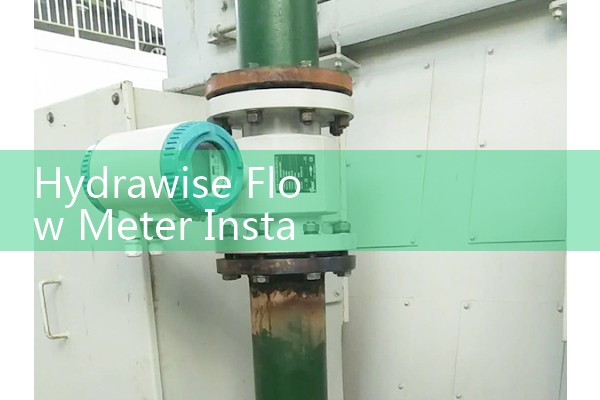
Hydrawise Flow Meter Installation: Straight Run Multiplier Guidelines to Eliminate Piping Swirl Noise
Quick Answer: Use a minimum upstream straight run of 10 pipe diameters and a downstream straight run of 5 pipe diameters for a Hydrawise flow meter. If the meter sits near a pump, control valve, or two elbows in different planes, multiply the upstream length by 1.5 to 2.5. This removes swirl noise and keeps the pulse output stable for the Hydrawise controller.
What Is the Base Straight Run for a Hydrawise Flow Meter
For most Hydrawise compatible flow meters, the base guideline is 10D upstream and 5D downstream. D means the internal pipe diameter. A DN50 pipe has a 50 mm internal diameter. So the upstream straight run is 500 mm and the downstream straight run is 250 mm. This applies to clean water, irrigation lines, cooling water, and light chemical dosing. In practice, many installers only leave 3D or 4D of space. That is not enough when a pump or elbow sits close to the meter.
Which Upstream Fittings Cause Piping Swirl Noise
Swirl comes from anything that changes the flow direction. A single 90 degree elbow creates moderate swirl. A partially open valve creates stronger swirl because the flow jet is uneven. Two elbows in different planes create a spiral flow pattern. A pump discharge creates the highest swirl and pressure pulsation. This swirl reaches the flow sensor and causes unstable readings. The Hydrawise controller then records pulse counts that jump up and down.
Straight Run Multiplier Guidelines for Common Installations
Start with a base upstream straight run of 10D. Multiply the base length by 1.5 for a single elbow or tee. Multiply by 2.0 for two elbows in different planes. Multiply by 2.5 for a pump discharge or a control valve less than 50 percent open. A DN25 pipe near a pump needs 25 mm times 10 times 2.5. That equals 625 mm of upstream straight pipe. A DN100 pipe after two elbows in different planes needs 100 mm times 10 times 2.0. That equals 2000 mm or 2 m of upstream straight pipe. The downstream straight run stays at 5D in most cases.
How Swirl Noise Affects Hydrawise Flow Readings
Swirl creates an unstable velocity profile at the flow sensor. An electromagnetic flow meter reads the mean velocity across the pipe. When swirl is present, the mean velocity is not stable. The Hydrawise controller receives pulse signals with missing or doubled counts. You see flow total jumps, false high flow alarms, or noisy flow graphs in the Hydrawise app. We have seen this on customer sites many times. A customer in Vietnam had a DN50 pipe with only a 3D upstream run after a pump. The pulse output jumped between 8 and 15 percent. We told him to move the meter to 25D upstream. The reading settled t
Which Silver Instruments Flow Meter Works with Hydrawise
Silver Instruments supplies the SIL-EM electromagnetic flow meter with pulse output for Hydrawise controllers. Sizes start at DN15 and go to DN300. The pulse output can be set from 0.1 Hz to 1000 Hz. Power supply is 24 VDC. Accuracy is 0.5 percent of reading. The electronics include a damping filter from 1 to 60 seconds. This filter reduces swirl noise when straight run is short. The meter also has a 4-20 mA HART output and an optional PT100 temperature sensor. We recommend the SIL-EM for irrigation, fertigation, and water transfer lines where Hydrawise reads pulse input.
What If You Cannot Provide the Full Straight Run
Install a flow straightener. A perforated plate flow straightener upstream of the meter can cut the required upstream straight run by half. If the guideline calls for 20D, you can use 10D with a plate straightener. Another option is a dual frequency excitation mode on the SIL-EM flow meter. Silver Instruments can configure the dual frequency mode for high swirl conditions. The flow signal updates faster and rejects swirl noise better. But most irrigation pipes have room for a simple straight run extension. Check the pipe route before you add a flow straightener.
FAQ on Hydrawise Flow Meter Straight Run
Does Hydrawise require a specific flow meter brand? No. Hydrawise accepts pulse input from many flow meters. The SIL-EM from Silver Instruments works because it has a configurable pulse output.
Can I install a Hydrawise flow meter vertically? Yes. Vertical installation with upward flow is good. Follow the same straight run guidelines upstream of the meter.
What is the minimum downstream straight run? 5D is the minimum downstream straight run for most installations. A shorter downstream run has less effect than a short upstream run.
Does pipe diameter affect the straight run length? Yes. The straight run length is proportional to pipe diameter. A DN100 pipe needs twice the length of a DN50 pipe for the same multiplier.
Can a flow straightener remove all swirl noise? A perforated plate straightener removes most swirl noise. It cannot fully remove pressure pulsation from a piston pump. Use a pulse dampener for that case.
Send us your pressure in bar, temperature in degrees C, pipe size in DN, and flow range. Tell us your Hydrawise controller model. Contact Silver Automation Instruments at Tel: +86-25-68650347, Whatsapp: +86-25-52155837, WeChat: +86 15365082610. We can recommend a pulse output flow meter for irrigation or water treatment systems in Southeast Asia, Oceania, Latin America, the Middle East, and Africa.
 Hot Blog
 Related AD