

『Hunter Wireless Flow Meter: Configuring Radio Frequency Transmitters for Long Distance Landscape Layouts』Related information(flow rotameter|digital flow meter|balo meter|hydraulic flow meter|volumetric meter|positive displacement meter|pitot tube flow meter|displacement meter|cfm meter|variable area flow meter|inline flow meter|differential pressure flow meter|calibrated flow meter|velocity meter|paddle wheel flow meter|oval gear flow meter|anemometer hvac|multiphase flow meter|doppler flow meter|thorpe tube flowmeter|heat flow meter)
Hunter Wireless Flow Meter: Configuring Radio Frequency Transmitters for Long Distance Landscape Layouts
Quick Answer: Long distance landscape layouts need a clear RF line of sight. Install the Hunter wireless flow meter transmitter at least 3 m above ground and away from metal boxes. If the link exceeds 150 m, add a repeater or use a higher gain antenna before you change flow settings.
We have seen this on many sites. A landscape contractor in Queensland set up a Hunter wireless flow meter across a 220 m turf zone. The signal worked for two weeks. Then it failed every afternoon. The cause was not the flow meter. It was a shipping container placed near the receiver. Metal blocks RF fast. Moving the receiver 2 m to the left solved the problem.
This article explains how to configure RF transmitters for Hunter wireless flow meters in long distance landscape layouts. It also shows when an industrial flow meter from Silver Automation Instruments makes more sense for larger pipes or process control.
What the RF Transmitter Actually Does
Hunter wireless flow meters use battery powered transmitters. The transmitter reads pulses from the flow sensor. Each pulse represents a known volume. The RF module sends that pulse count to the Hunter controller. Most landscape models operate near the 900 MHz band in North America and 868 MHz in parts of Asia and Oceania. The receiver at the controller decodes the count and calculates flow rate and total volume.
Because the system is pulse based, the RF link carries only a short data burst. That is good for battery life. But the link still needs a stable path. Walls, dense trees, earth berms, and metal roofs reduce signal strength quickly.
Step by Step Configuration for Long Distance Layouts
Start with antenna height. Mount the RF transmitter at least 3 m above the ground. On flat sites, 3 m is enough for 150 m to 250 m links. On sites with slopes or shrubs, go to 5 m or use an external mast. We have seen a public park in Jakarta where raising the antenna from 2 m to 4 m doubled the reliable range. No setting changes were needed.
Second, keep the transmitter away from metal enclosures, valve boxes, and concrete walls. Metal reflects RF and creates dead zones. A plastic or fiberglass enclosure is fine. If you must use a metal box, mount the antenna outside.
Third, pair the transmitter and receiver with the correct ID code. Follow Hunter controller instructions for the specific model. Use the signal strength display on the controller when available. Walk the route with the transmitter powered. Check signal at the farthest point before you bury cable or close valve boxes.
Fourth, if the distance is over 250 m or the path crosses a road, add a repeater. A repeater receives the signal and retransmits it. This is common on golf courses and large resorts. Place the repeater at a high point between the flow meter and the controller. Solar power kits can keep the repeater running in remote areas.
Fifth, set the flow alarms. Long distance layouts often have hidden pipe breaks. The Hunter controller can trigger an alarm if flow stays high or low. Set the alarm thresholds based on actual irrigation demand. For a 100 mm main line, a flow of 45 m3/h might be normal at peak. A flow of 5 m3/h at night could indicate a leak. Use the controller totalizer to confirm daily volume.
Common RF Problems on Customer Sites
One problem is battery voltage. A weak battery reduces transmit power. The range drops slowly. Maintenance teams often replace the flow sensor but not the transmitter battery. Check battery voltage every six months on long distance layouts.
<
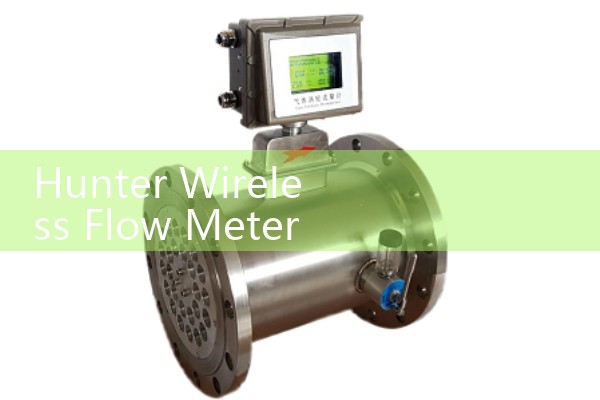
Soil moisture around the valve box also matters. Water absorbs RF. If the transmitter sits in a flooded valve box, range drops. Use a drain hole or a raised mount inside the box. Keep the antenna above the rim.
When to Move from a Hunter Flow Meter to an Industrial Flow Meter
Hunter wireless flow meters work well for landscape irrigation. But some projects outgrow them. You may need a larger line size. Hunter models usually cover smaller plastic pipe sizes. If your project has a DN150 or DN200 steel main line, you may need an inline electromagnetic flow meter with a 4-20 mA HART output.
Industrial water lines often need more than pulse output. A SCADA or PLC system may require Modbus RTU, 4-20 mA, or HART. Hunter controllers are not designed for process control. Silver Automation Instruments supplies electromagnetic flow meters for raw water, wastewater, and irrigation booster stations. These meters handle DN15 to DN300 and larger. They provide 4-20 mA, HART, Modbus, and pulse outputs. Typical accuracy is 0.5 percent of reading. That is useful when you bill tenants or track water rights.
For diesel powered irrigation pumps, Silver Automation Instruments supplies oval gear flow meters. These measure fuel consumption in L/h. A customer in Saudi Arabia used one on a remote pivot irrigation system. The pump ran 12 hours per day. The oval gear meter gave the exact fuel burn and matched the generator logbook.
Frequently Asked Questions
What is the maximum RF range for a Hunter wireless flow meter?
In open air, plan for 150 m to 300 m. With trees, walls, or earth, the reliable range can drop below 100 m. Use a repeater or higher gain antenna for long distance landscape layouts.
Can I use a repeater to extend the signal?
Yes. A repeater helps when the path crosses a road, a dense hedge, or a metal building. Mount the repeater high and between the transmitter and controller. Some repeaters run on solar power.
What pipe sizes does the Hunter wireless flow meter support?
Most Hunter wireless flow sensors fit landscape pipe sizes from 25 mm to 100 mm. For larger mains or steel pipe, an electromagnetic flow meter is a better fit. Silver Automation Instruments can quote a DN150 or DN200 meter with a pulse or 4-20 mA output.
When should I switch to an industrial flow meter?
Switch when the pipe size exceeds 100 mm, when you need 4-20 mA or Modbus to a SCADA system, or when the water is dirty. Electromagnetic and ultrasonic meters from Silver Automation Instruments handle these conditions well.
Does Silver Automation Instruments supply RF transmitters for Hunter flow meters?
We do not supply Hunter spare parts. But we supply complete industrial flow meter packages with transmitters, 4-20 mA, HART, and Modbus. Send us your pipe size (DN), pressure (bar), temperature (°C), and flow range. We will recommend a meter that fits your site.
Contact Silver Automation Instruments.
Tel: +86-25-68650347
Whatsapp: +86-25-52155837
WeChat: +86 15365082610
Website: flow-meter.com.au
Send us your pressure (bar), temperature (°C), pipe size (DN), and flow range. We will reply within one business day.
 Hot News
 Related AD