

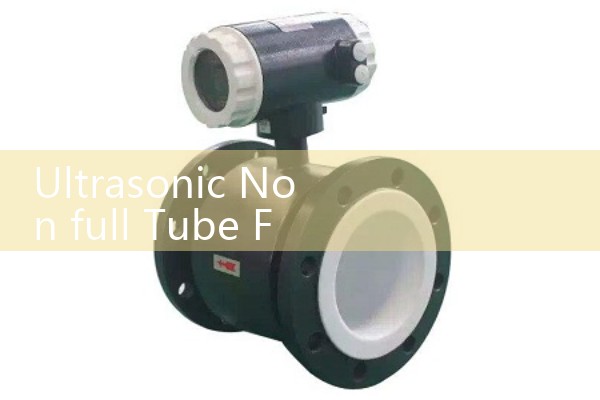
『Ultrasonic non full tube flowmeter』Related information(flow rotameter|digital flow meter|balo meter|hydraulic flow meter|volumetric meter|positive displacement meter|pitot tube flow meter|displacement meter|cfm meter|variable area flow meter|inline flow meter|differential pressure flow meter|calibrated flow meter|velocity meter|paddle wheel flow meter|oval gear flow meter|anemometer hvac|multiphase flow meter|doppler flow meter|thorpe tube flowmeter|heat flow meter)
1. Application principle of portable Doppler ultrasonic flowmeter for river channel pipelines. The application principle of portable Doppler ultrasonic flowmeter for river channel pipelines is based on the Doppler effect, which measures flow velocity and flow rate through the interaction between ultrasound and particles or bubbles in the fluid. The following is a detailed explanation of its core principles and working methods.
1. Basic principle of Doppler effect: Frequency shift phenomenon: When an ultrasonic signal (with a transmission frequency of (f_0)) encounters moving particles or bubbles in a fluid, the frequency of the reflected wave will change ((f)), and this phenomenon is called the Doppler effect. The frequency offset (Delta f=f-f_0) is proportional to the fluid flow velocity ((v)). Mathematical relationship: According to the Doppler formula, the frequency offset can be expressed as: [Delta f=frac {2v cdot f_0 cdot costheta} {c}], where: (v) is the fluid velocity; (theta) is the angle between the direction of ultrasonic propagation and the direction of fluid flow; (c) The propagation speed of ultrasonic waves in the medium (affected by temperature and compensated by a temperature sensor)
2. Signal transmission and reception during flow rate measurement: The ultrasonic transmitter of the flow meter emits a fixed frequency ultrasonic signal into the fluid, which is reflected back to the receiver when it encounters suspended particles or bubbles. Frequency difference calculation: By measuring the frequency difference (Delta f) between the transmitted signal and the echo signal, combined with the known ultrasonic frequency (f_0), propagation angle (theta), and sound velocity (c), the fluid flow v
3. Flow rate calculation method Velocity area method: Flow rate (Q) is calculated by multiplying the flow velocity (v)) with the cross-sectional area (A): [Q=v cdot A] Sectional area determination: Supports full and non full pipe measurement, and users can freely set the cross-sectional water level relationship (such as rectangular, trapezoidal, circular and other regular sections, or irregular sections fitted by a water level area curve). Real time flow output: Provides instantaneous flow value (unit: m3/s) and cumulative flow value (unit: m3) to meet the needs of different scenarios
4. Technical features and advantages Wide range and high resolution: Flow velocity measurement range: 0.02-5 m/s; The resolution can reach 1 mm/s, suitable for monitoring low flow rates and small flow changes. High response and real-time performance: Real time refresh of measurement results, short response time, suitable for dynamic flow field monitoring. Strong anti-interference ability: no mechanical rotating parts (such as propellers and bearings), avoiding mud blockage or water grass entanglement; Suitable for turbid water and slurry containing sediment, suspended solids, or floating debris (such as urban sewage and silt). Environmental adaptability: anti-corrosion shell design, capable of long-term operation in harsh environments; Support the standardized flow measurement mode and fixed section flow measurement mode for river testing, adapting to regular/irregular sections. Easy to operate: intuitive reading,
 Hot Product
 Related AD