

『Kerosene Flow Meter DN100 Industrial Heating System Sizing』Related information(flow rotameter|digital flow meter|balo meter|hydraulic flow meter|volumetric meter|positive displacement meter|pitot tube flow meter|displacement meter|cfm meter|variable area flow meter|inline flow meter|differential pressure flow meter|calibrated flow meter|velocity meter|paddle wheel flow meter|oval gear flow meter|anemometer hvac|multiphase flow meter|doppler flow meter|thorpe tube flowmeter|heat flow meter)
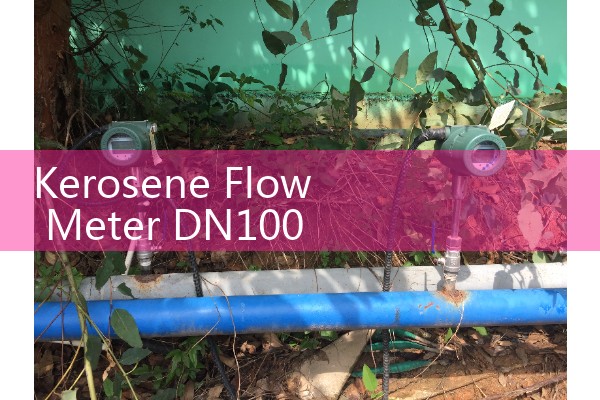
Kerosene Flow Meter DN100 for Industrial Heating Systems: Sizing, Selection and Pricing
Quick Answer: For a DN100 kerosene line feeding a boiler or thermal oil heater, the most practical meter choice is often a vortex flow meter with integral PT100 temperature compensation. Typical sizing runs 15,000 kg/h to 45,000 kg/h at operating pressures from 4 bar to 16 bar. You also need a meter that handles kerosene viscosity around 1.3 cP at 40 °C without moving parts clogging, which makes oval gear meters a solid backup where high batch accuracy is mandatory.
Many engineering teams in Southeast Asia and the Middle East size DN100 kerosene meters differently than water meters. Kerosene has lower density, around 790 kg/m³ to 810 kg/m³, and low conductivity. That rules out magmeters immediately. Turbine meters used to be the default years ago, but maintenance teams complain about bearing wear when heating systems cycle on and off rapidly. We have seen this on customer sites from Vietnam to Nigeria.
So the real decision sits between a vortex flow meter and a Coriolis mass flow meter, with oval gear meters still holding a niche in batch blending for petrochemical heating skids. The pipe is DN100, almost always Schedule 40 carbon steel, and the fluid is clean kerosene, not crude oil. That simplifies things a lot.
Step One: Confirm Your Actual Flow Range, Not Just the Pipe Size
DN100 sounds like a number that decides everything, but it does not. A heating system burner with a 10 MW thermal capacity might draw 3,500 L/h, while a much larger process heater can push 50,000 L/h through the same pipe. Most engineers skip this part until the meter reads poorly at low fire. Last year a paint manufacturer in Saudi Arabia called us with a complaint that his DN100 vortex meter lost signal at 1 m³/h. The turndown was too aggressive. We replaced it with a dual-range configuration.
So gather the minimum flow and maximum flow in kg/h or L/h under normal running conditions. Also note the temperature at the meter location. Kerosene leaving a day tank might be at 30 °C, but some re-circ lines near the burner run above 90 °C. A standard vortex meter with a remote transmitter can handle 120 °C, while an oval gear meter needs to stay within its thermal expansion tolerances, usually 80 °C for standard iron body.
Silver Instruments supplies the SIL-VF series vortex flow meter with an integrated PT100 sensor. This single insertion-type or inline DN100 meter outputs 4-20 mA HART with volumetric flow and corrected mass flow based on live temperature. For applications where the heating system demands custody-transfer or blending accuracy, we often propose the SIL-OG oval gear flow meter with a pulse output and a local totalizer.
Kerosene Viscosity and Meter Type: The Practical Truth
Kerosene at ambient temperature is about 1.3 cP to 1.8 cP. That is low, very close to water. Vortex meters work fine here. In practice, what kills performance is entrained air after tank filling, not viscosity. If your kerosene supply line often drains and refills, air pocketers cause the vortex shedding to drop out. A pair of straight pipe runs of 15D upstream and 5D downstream solves most of it. Flow straighteners can help when space is tight in a boiler house in the Philippines or a heating skid in Kenya.
Some consultants still specify positive displacement meters for kerosene because they think of fuel oil. Oval gear meters do deliver ±0.5% of reading accuracy even at trickle flows, which is great when you batch kerosene into a burner pre-heat cycle. But you must install a Y-strainer with 200 micron mesh upstream. Eighty percent of the sticky gear failures we see in the workshop trace back to a missing or clogged strainer.
Sizing a Coriolis Meter on DN100 Kerosene Lines
Coriolis mass flow meters give direct mass flow, density, and temperature, all from one device. That matters when heating system operators buy kerosene by weight and need to log heat input precisely. A typical DN100 Coriolis meter for kerosene would have a flow range from 2,000 kg/h up to 60,000 kg/h, with a maximum pressure drop of 0.4 bar at top flow. Silver Instruments offers the SIL-CMF series, stainless steel wetted parts, ATEX Zone 1 certification for petrochemical campuses, and Modbus RTU output alongside 4-20 mA.
But the cost is higher. A DN100 Coriolis
Installation Notes That Prevent Rework
On a DN100 kerosene line, avoid installing the meter right after a control valve or a high-point vent. If the pipe is not full, the reading becomes useless. Always place the meter in a low section of the pipe run where back-pressure keeps the liquid column stable. A downstream check valve or a minimum pressure of 1 bar above vapour pressure at operating temperature prevents cavitation. For vortex meters, the minimum back-pressure rule is about 0.6 bar, but we like to double that in hot kerosene applications.
Temperature compensation is not optional. Kerosene density shifts roughly 0.07% per °C. If your heating system burns kerosene at 35 °C in the morning and 70 °C by midday, an uncompensated volumetric meter will show a 2.5% error in mass terms. That adds up to a few tons of fuel unaccounted for every month in a large hospital heating plant in Indonesia. Our SIL-VF meters ship with PT100 sensor factory fitted and the correction curve loaded before dispatch.
Typical Data We Need to Size Your DN100 Kerosene Meter Correctly
When you send an email to Silver Automation Instruments, skip the generic inquiry. Tell us the exact numbers. Operating pressure in bar, kerosene temperature at the meter inlet, minimum and maximum flow in kg/h or L/h, required output signal (4-20 mA HART, pulse, Modbus), and hazardous area classification if you need ATEX or IECEx. Also mention the pipe material and schedule.
If you already have a preferred brand or a local distributor in the Philippines, Mexico, UAE, or South Africa, we can match the face-to-face dimension and flange standard. Our factory in China builds to ANSI, DIN, JIS, or AS 2129 specs as standard. Lead time for a DN100 kerosene vortex or oval gear meter is typically 2 to 3 weeks, and we ship DHL or air freight to any major airport.
We know pricing matters. A DN100 vortex flow meter for kerosene heating systems from Silver Instruments starts around USD 1,100 FOB, depending on transmitter options and approvals. A DN100 oval gear meter with a pulse output is in the same range. A Coriolis meter needs an engineering review before quoting, because we select the tube geometry based on your maximum flow and permissible pressure loss.
FAQ About Kerosene Flow Meter DN100 Heating System Sizing
Can I use an electromagnetic flow meter for kerosene? No. Electromagnetic meters need a conductive liquid, and clean kerosene has zero conductivity. You need a vortex, oval gear, turbine, or Coriolis meter.
What straight pipe run does a DN100 vortex meter need for kerosene? The standard recommendation is 15D upstream and 5D downstream. In crowded boiler rooms, we can supply an inline flow straightener to reduce the requirement to 3D upstream.
Does kerosene require a special flow meter material? Not for clean commercial kerosene. Stainless steel 304 or 316 wetted parts are standard. For kerosene with possible moisture or mercaptan traces, we recommend 316L and FKM seals.
How do I convert volumetric kerosene flow to mass flow for heating efficiency? Use a flow computer or a meter with built-in density correction. Our SIL-VF vortex meter outputs both volume and compensated mass flow using live kerosene temperature and standard density reference of 800 kg/m³ at 15 °C.
What is the typical lead time for a DN100 kerosene flow meter to Saudi Arabia or Brazil? Standard meters are available in 2 to 3 weeks. ATEX-certified units may add one week. We ship to Dammam, Jeddah, Santos, or any port and can provide a DHL tracking number the same day.
Send us your pressure, temperature, pipe size, and flow range. One of our engineers will reply with a specific model, data sheet, and FOB price within one working day. Use the subject line “DN100 Kerosene Meter Sizing” so we route it straight to the industrial heating team at Silver Automation Instruments.
 Hot Product
 Related AD